
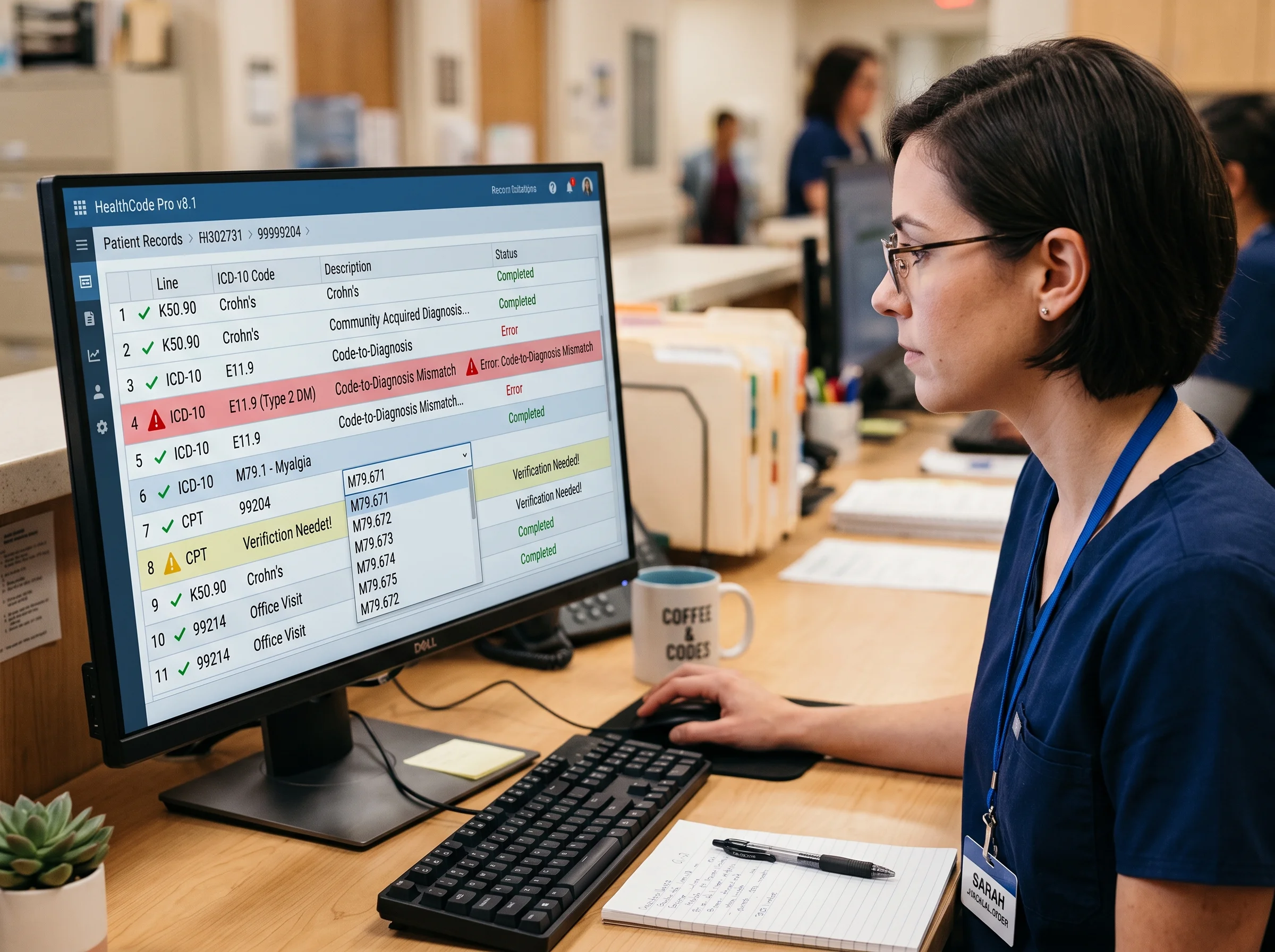
Common Medical Coding Errors and How to Avoid Them
Medical coding plays a vital role in the healthcare revenue cycle, directly impacting reimbursements and compliance. Even small coding errors can lead to claim denials, delayed payments, or legal complications. Understanding the most common mistakes and how to avoid them is essential for maintaining accuracy and financial stability in any healthcare practice.
One of the most frequent errors is incorrect or outdated coding. Medical codes such as CPT, ICD, and HCPCS are regularly updated, and using outdated codes can result in claim rejections. To avoid this, coding professionals must stay current with annual updates and industry guidelines through continuous training and reliable resources.
Another common issue is upcoding and downcoding. Upcoding occurs when a higher-level service is reported than what was provided, which can lead to compliance risks and penalties. Downcoding, on the other hand, involves reporting a lower-level service, resulting in lost revenue. Ensuring accurate documentation and conducting routine audits can help maintain proper coding levels.
Incomplete or missing documentation is also a major contributor to coding errors. Without clear and detailed medical records, coders may assign incorrect codes or fail to justify the services billed. Healthcare providers should prioritize thorough documentation to support all procedures and diagnoses.
Unbundling errors occur when services that should be billed together are incorrectly separated, leading to overbilling. Similarly, duplicate billing can happen when the same service is billed more than once. Implementing automated billing systems and regular claim reviews can help identify and prevent these issues.
Another critical mistake is incorrect patient or insurance information, which can cause claim denials before coding is even reviewed. Verifying patient details and insurance coverage at the initial stage ensures smoother claim processing.
To avoid these common errors, healthcare practices should invest in regular staff training, use updated coding software, and perform periodic internal audits. Leveraging technology and maintaining clear communication between providers and billing teams can further enhance accuracy.
In conclusion, minimizing medical coding errors is key to improving revenue cycle efficiency and maintaining compliance. By focusing on accuracy, proper documentation, and continuous improvement, healthcare organizations can reduce denials and secure consistent reimbursements.